As India’s Gen Z cohort approaches full voting age, political strategists are increasingly confronting a challenge long familiar to marketers: how to understand and engage a vast but highly heterogeneous audience. This article traces the evolution of generational segmentation from its origins in marketing theory to its growing relevance in political communication. It argues that the future belongs not to broad-brush appeals aimed at “the youth,” but to sophisticated micro-segmentation that recognises the diverse aspirations, identities and realities within India’s 400 million-strong Gen Z population.

Category: Advertising Strategy
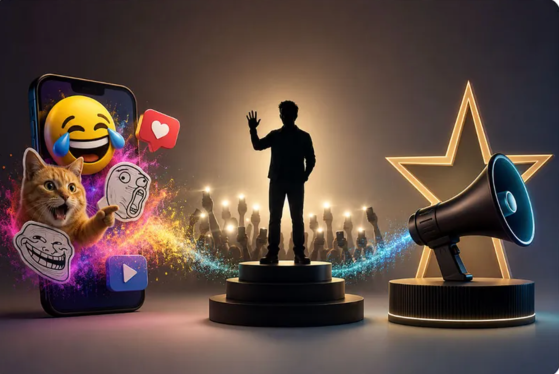
The Meme, The Celebrity & Brandcasting
ncy of the digital era, while celebrities increasingly function as continuous generators of shareable cultural moments. But where do brands fit into this ecosystem? Can brands themselves become celebrities? And does a large follower base necessarily translate into true influence or virality? This column explores the evolving relationship between memes, celebrity and brands, arguing that the future lies not in chasing random virality but in what might be called “brandcasting” — the transformation of brands into sustained cultural presences that entertain, inform and emotionally engage audiences.
Market Modelling in a Siloed World
Over the past few decades, the influence of the Internet, digital media and e-commerce has had a huge impact on consumer marketing and shaken up the traditional structure and dynamics of the world’s advertising and market research agencies. While AI will further accelerate the change, in my MxMIndia column this fortnight, I outline the blossoming opportunity for a new kind of marketing services agency.
Advertising within LLMs – Slippery Slope Redux
As the worthies gather in Delhi to discuss the potential of AI, a distinct peril looms on the horizon as OpenAI prepares to introduce advertising into ChatGPT. My post today does my bit to sound the alarm.
Brand Senescence: When Old Brands Don’t Age Gracefully
Another year passes into the maw of an onrushing new year. For those of us who have seen one too many, thoughts inevitably turn to aging. Applying a professional lens I examine why some brands don’t age well while others do just fine.
Narrative Coherence: The Extant Measure of Brand Equity (2025 Edition)
Back in 2019, when I first wrote about Narrative Coherence as a brand equity dimension, social media, influencer and performance marketing were beginning to push traditional advertising to the margins. In 2025, as the transition is almost complete and another transition – the age of AI – looms, I revisit the topic
From Recall to Rasa: Toward a New Theory of Advertising
Over my four decades in advertising, the last decades have seen the most change. The mean constraints of performance marketing, the obscurities of Big Data and soon the uncharted territory of AI. To regain its mojo, advertising needs to be more creative — not less —more in touch with the human side of the consumer, and move towards realising its potential as an art form. This fortnight, my MxMIndia column cloaks this thought in the form of a new theory of advertising. Sort of.
The Three Immutable Laws of Brand-Building
Much has changed over the four decades in my career as a brand and communication strategist. From the certainties of mass-media to the flux of the digital world. From the world of product UPSs to psychographic segmentation. However I find that the fundamentals of brand-building remain much the same. This post outlines three.
The Four Sort Of Fundamentals of Maybe Going Viral
Making a video or post go viral is the holy grail in digital marketing.
Today’s post on my blog lists some pointers emerging from a recent exhaustive study in the US market and leads from there to a couple of larger questions regarding the science and art of advertising.
Decoding Creative Advertising – Addressing The Highest Common Denominator (HCD)
Here is the second of the series “Decoding Creative Advertising” where I reference Apple’s advertising over the decades to discern a greatness-making creative strategy driving some of their campaigns. The first of this series was published on my blog on June 3 where I examined the creative strategy driving the Volkswagen Beetle campaign of the 50s.