In the early decades of modern advertising – from the 1920s to the 1950s – the advertiser’s primary task was functional: to inform potential consumers that a product existed, was accessible and was superior in some tangible way. The ‘USP’ (unique selling proposition), as Rosser Reeves famously codified in the early television era, was king. Soap washed whiter, tyres lasted longer, toothpaste prevented decay.
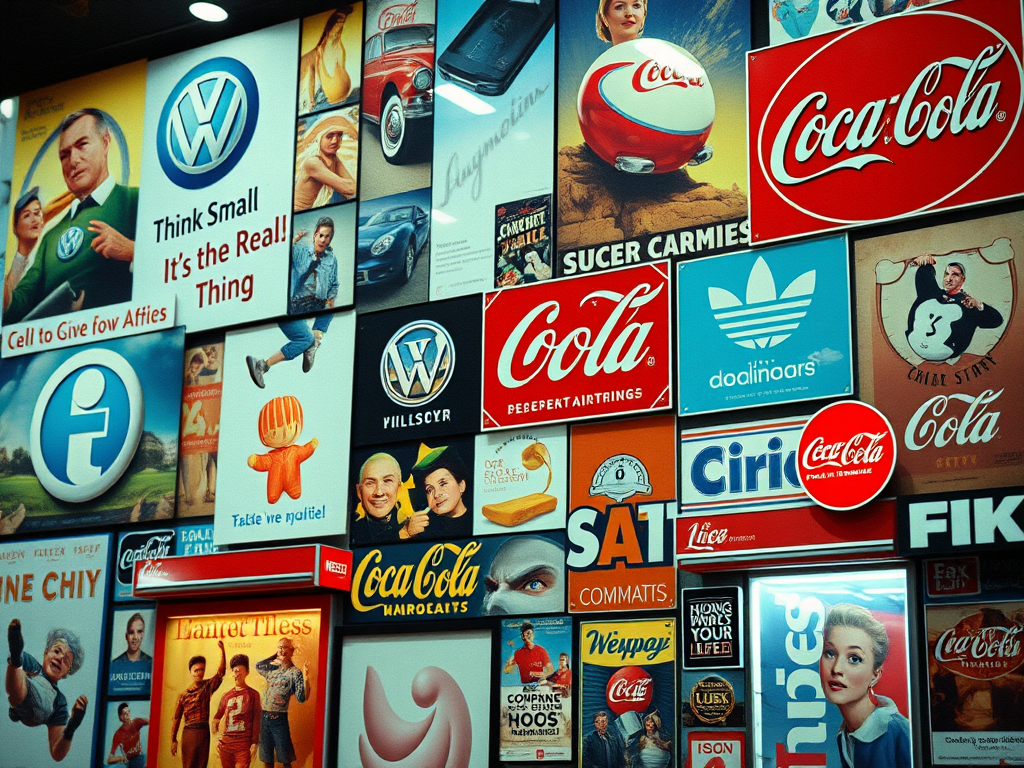
Then came prosperity. The post-war consumer society of the 1950s and 1960s flooded markets with near-identical products. Functional differentiation disappeared and brands began to compete through image. The task of advertising evolved from informing to transforming – from utility to aura. The age of the brand personality had begun. Bernbach, Ogilvy and Burnett turned the product into a story, a set of values, a mirror for aspiration. Volkswagen’s ‘Think Small’, Coca-Cola’s ‘It’s the Real Thing’, and Marlboro’s cowboy all sold identity as much as function. In India, ‘Hamara Bajaj’ was an outstanding example.
By the 1980s and 1990s, when media choices multiplied and cable television fragmented audiences, segmentation became the dominant strategic lens. Brands targeted ever finer slices of demographic and psychographic identity – the achiever, the experiencer, the belonger. Advertising became an exercise in precision persuasion.
Today, this neat structure is collapsing. The mass audience – the oxygen on which twentieth-century advertising thrived – has dissipated. Mass media is in terminal decline, its reach and authority eroded by digital platforms. Social media, for a while, stepped into the vacuum. Algorithms aggregated like-minded users and offered brands hyper-targeted precision. Thus was born the performance-marketing age, where every impression could be tracked and every click monetised.
But the algorithmic era has also reached a breaking point. As social media has morphed into a network of self-reinforcing tribes, each with its own facts, values, and aesthetics, advertisers face a paradox. Never before have brands had more data, and never before has it been harder to find common ground. What we are witnessing is the fictionalisation of society – the emergence of cognitive and cultural tribes that define belonging not by demographics or psychographics, but by belief and identity.
In such a world, traditional segmentation ceases to matter. A 25-year-old woman in Mumbai might share more attitudes with a 45-year-old man in Berlin who belongs to the same online subculture than with her neighbour next door. The very idea of a coherent audience – the bedrock of media planning – is melting away.
Marketers, in response, continue to slice thinner – more micro-segments, more lookalike audiences, more data science. Yet the results are diminishing. Awareness and recall are fragmenting. Most brand decisions today, especially in consumer goods and services, are made at low involvement – a mix of affordability, convenience, and happenstance.
The traditional awareness ladder – from aided to unaided to top-of-mind awareness – assumed that increasing cognitive salience leads to purchase intent. But in a world of tribal fragmentation and attention fatigue, top-of-mind awareness is no longer enough. It produces recognition without engagement. The brand name may be familiar, yet it fails to invite emotion or exploration.
This is where advertising needs a new rung – one that transcends recognition and evokes emotional magnetism.
Let us call this new rung curiosity-inducing awareness – the moment when a brand’s message triggers not merely recognition but fascination. It compels the viewer to lean in, to want to know more, not because the message is overtly persuasive but because it touches something primal.
Even in an age of ideological fragmentation, there are still a few universal currencies of emotion – love, wonder, humour, awe, heroism, peace. Great popular culture taps into these basic emotions, transcending tribe and context. A Korean song can become a global anthem; a Pixar film can move both a child and an adult in equal measure. These are not demographic effects but aesthetic ones.
Advertising, at its best, has always borrowed from this aesthetic. But now, it must re-anchor itself in emotion as the only shared human denominator left.
Ancient Indian aesthetics provides a remarkably prescient framework for this. The Natyashastra, written more than two millennia ago, identified nine rasas – the foundational essences of emotion: Shringara (love), Hasya (laughter), Karuna (sorrow), Raudra (anger), Veera (heroism), Bhayanaka (fear), Bibhatsa (disgust), Adbhuta (wonder), and Shanta (peace).
These are not passing moods; they are the deep grammar of human affect. Every work of art, Bharata Muni argued, succeeds only when it evokes one or more of these rasas in harmony. Advertising, if it aspires to cultural relevance in the AI age, must rediscover this grammar.
To understand curiosity-inducing awareness, consider the 1984 Apple Macintosh commercial – the defining ad of the television era. Directed by Ridley Scott and aired only once nationally during the Super Bowl, it channels Veera Rasa – heroism – in its purest form. A lone woman, hammer in hand, rebels against a totalitarian screen of conformity. The product – a personal computer – is never even shown in action. The emotion does the selling. The ad didn’t just inform or persuade; it electrified curiosity. Viewers didn’t know exactly what the Macintosh was, but they had to know.
Another striking example is Dove’s ‘Real Beauty’ campaign. Rooted in Karuna Rasa (empathy, compassion), it bypassed rational claims about moisturising and instead provoked reflection and dialogue about self-image. The result was engagement that crossed demographics, cultures, and ideologies – a triumph of curiosity over commerce.
On the other hand, emotional mis-keying can destroy meaning. Consider the Native RO ad in the IPL 2025 season – an ambiguous narrative that left viewers unsure whether it sought Karuna (sorrow) or Hasya (humour). The result was neither empathy nor amusement, but Bibhatsa (disgust). Emotional dissonance, not curiosity.
The contemporary advertising machine, dominated by ‘performance metrics’, often mistakes measurement for meaning. Click-through rates and view times quantify behaviour, not emotion. The AI-driven optimisation loop amplifies what works statistically, not aesthetically. Yet human attention is not an algorithmic variable; it is an emotional one.
A curiosity-inducing campaign does not need to go viral in the old sense; it needs to reverberate. A great ad today must do what great songs, memes, and poems do: stay in the mind’s echo chamber. It must create a sense of unfinished meaning – an emotional itch that prompts people to seek more. In that sense, curiosity becomes the new persuasion.
In the AI era, this emotional intelligence will matter even more. Generative AI can already produce flawless images, scripts, and voices. What it cannot (yet) simulate is emotional authenticity. The new creative advantage will lie in understanding the emotional architecture of tribes – their fears, yearnings, and myths – and evoking a rasa that cuts through the noise.
We are entering what might be called the post-audience age – where tribes, not markets, define identity. Each tribe speaks its own dialect of truth. Yet within every tribe, there remain emotional universals. The brand’s task is not to flatter a tribe but to bridge across through shared emotion.
Nike’s ‘You Can’t Stop Us’ (2020) achieved this during the pandemic by invoking Veera (heroism) and Shanta (resilience). It celebrated athletes not as superhumans but as humans who persevere. It neither denied division nor succumbed to it – it transcended it through emotion.
In India, the Fevicol campaign has, for decades, done something similar through Hasya Rasa – laughter grounded in cultural truth. Each ad, from ‘Fevicol ka mazboot jod hai, tootega nahi’ to the ‘Bus overloaded with people’ spot, transcends tribe by making the universal comic observation that “Indians improvise.
We can, therefore, propose a new working framework for advertising creativity:

 hardraincafe.blog