The post-digital era is dawning upon us.
Digital and social media platforms that till yesterday seemed to be ushering in a new era of marketing are rapidly losing their power.
The intrusiveness and volume of digital and social media messaging coming at an individual are rapidly converting what was once touted to be intimate, highly targeted communication to white noise.
As a result online marketing channels are increasingly seeing diminished returns and audiences are getting harder and harder to reach and engage with.
Combined with it is an incipient trend, most visible among the young who have been smartphone users now for a few years, of individuals getting disenchanted by the world of the screen and beginning to look for more real world engagement (in India the young form the NCCS A strata of society are part of this trend. The young from the NCCS B and C are still relatively new to the world of the smartphone and broadband connections and thus are still in thrall of the screen world).
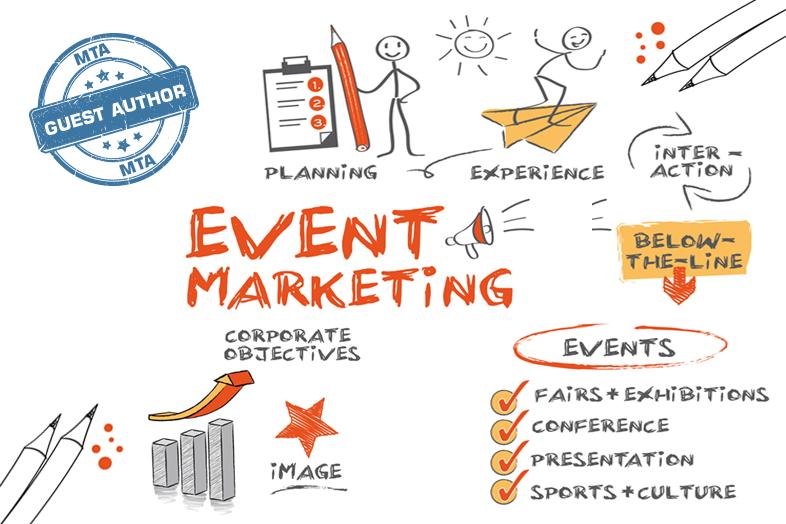
As the consumer begins to crave human, in-person experience event marketing will probably emerge as the next big high growth area.
Before that happens however event marketing will need to tackle the perception among marketers about the effectiveness of event marketing not being trackable, unpredictable and not ROI-driven.
The top players in the event marketing universe recognise both the opportunity and the challenge.
A study by HBR Analytic Services identified three attributes of event strategies that have enabled a handful of brands and businesses to make event marketing an integral and growing part of their marketing mix:
- An investment in integrated, event technology
- The ability to measure from top to bottom funnel
- And a shift in strategy from sponsored to hosted and owned experiences
In the B2B space Salesforce is big on event marketing. It hosts hundreds of events every year including mega-productions like the 10,000 person Connections event and Dreamforce, the largest software conference in the world that draws more than 170,000 people.
Even brands that live online recognise the importance of event marketing. Yelp coordinates and hosts hundreds of events for its core users – members of the Yelp Elite Squad- each month. Facebook has an intensive event slate aimed at connecting with the 70 million small businesses that use Facebook as a marketing platform.
A survey by HBR found that B2B companies spend about 29% of their marketing budgets on events while B2C companies spend 19%.
Adoption rates of event marketing as a key marketing channel are beginning to pick up among leading edge B2C companies.
Estee Lauder Companies’ MAC Cosmetics uses it physical stores as venues for high-frequency events – example celebrity appearances paired with free-sample giveaways and free makeup applications.
Most marketers who invest in event marketing significantly know that event marketing works. However they believe that hard attribution is a challenge. The key dimension of this challenge is multi-touch attribution.
Most marketers measure the results of event marketing at the top of the funnel – number of people attending an event, the number of qualified sales leads generated by the event (principally applicable in the B2B context), brand awareness and social media mentions. Some B2B companies have started leads down pipelines to actual sales.
In the B2C context I believe it is critical for event marketing to be coupled with intensive database marketing efforts.
The first step of course is to make sure that event attendance is converted to a database.
Database collection is easier to do for events that are “owned” by the brand and the resultant database is likely to be more relevant and richer, However with a little bit of effort this is also doable and rewarding at events where the brand is one of the sponsors.
I am surprised how often this key first step is neglected. In which case the marketing team has no reason to complain about attribution of event marketing budget.
In fact attribution systems in the case of events, I believe, are much easier to build and run then for mass media and for some aspects of digital advertising.
Once the database is in place, database marketing should kick in and could go through a cycle.
The Database Marketing Cycle
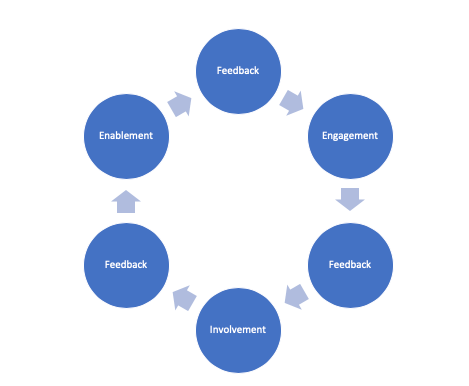
Engagement is the building of an interactive communication channel with the consumer. Involvement is drawing in the consumer as a creator and advisor and Enablement is enabling the consumer to become a brand evangelist by providing her the right kind of tools.
At every stage of the consumer journey from engagement to involvement to enablement, feedback is sought and acted upon.
It is my belief that in the post-digital era when people have started craving real-life engagement, event marketing if combined with the above cycle of database marketing would yield ROIs that would compare well, if not outstrip, other areas of marketing.

 hardraincafe.blog
Brilliant post! I agree, those who do event marketing and know how do it well add significant value to their engagement with audiences..
LikeLike