A patina of class never hurts a brand.
It is this insight that drives the billion of dollars being spent on glossy, high-production value advertising across the world.
The issue becomes a lot stickier though when it comes to the question of a niche brand operating in the luxury segment seeks to use its sheen to enter a much larger mass premium market.
Luxury brands from a wide range of categories have tried to go mass premium with differentiated brand and product extensions- for example Armani with Armani Exchange and Mercedes with the A Class hatchback – with limited or no success.
What gives?
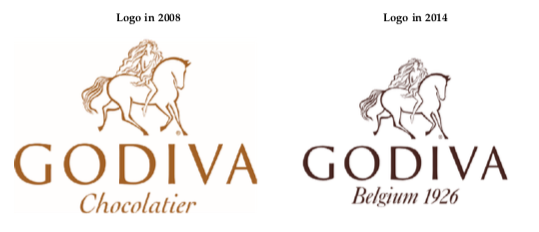
Godiva a chocolate brand with artisanal roots and sharply positioned at the luxury end of the market, had in 2008 global sales of over USD 510 million with 56% being accounted by the US market. Godiva in 2008 was in essence a retail brand selling mostly through exclusive brand stores.
In 2008 Godiva was bought by Yildiz a $8 billion Turkish conglomerate with a leadership position in the confectionery mass market in Turkey and nearby regions.
For Yildiz, Godiva was a prestige acquisition and in the beginning Yildiz decided to give Godiva management in the US a free hand. In fact Murat Ulker, the Chairman of Yildiz, brought in prominent people from the luxury industry on Godiva’s Board to, as he stated “to protect the Godiva brand from me”.
However culture will tell and the Yildiz DNA started to take hold.
Godiva as a luxury brand with an entry price of $30-$50 was largely restricted to the gifting segment with more than 80% of its US sales coming from two occasions – Thanksgiving and Valentine’s.
The decision was taken to move Godiva into the FDM (Food, Drugstore, Mass) channel to carve out a share at the mass premium market with a range of products – bars, truffles etc. – on the $3 to $10 range.
Two years later it was clear that the move was not a success. While sales had increased to USD 700 million, earnings before interest and tax (EBIT) had fallen from USD 34.0 million (6.7% of sales) to USD 25.3 million (3.6%).
To my mind the reason for the failure was a plan that, at its core, fell between two cultures.
Because Yildiz instead of going all in, played the game from the sidelines. While Yildiz was determined to give Godiva USA a free hand in strategy and execution it did not account for the insidious effect of the Yildiz DNA.
As a result, we had the spectacle of marketers schooled in the luxury category strategising and executing an entry into a mass premium market.
After a point, disappointed by lukewarm results, Yildiz decided to go all in. It replaced the Godiva US management with Yildiz people with deep experience at the mass and mass premium market. And set itself a goal of achieving a sale of $10 billion in 10 years.
Did Yildiz succeed with their Godiva revamp? In an effort to find success in the mass market did Godiva lose share at the luxury end? Did it start making sense in terms of EBIT?
The jury is out on the above questions.
However one learning that we can perhaps take home from the Godiva case is that there is no halfway house when a brand wants to successfully extend from the class market to the mass market.
One has to go all in. In terms of brand architecture and investments in product design, logistics, sales and marketing. And most importantly creating an appropriate culture that drives the mass market effort.
In other words, extending a luxury brand successfully into the mass premium market is in essence the creation of a new company with the luxury brand being, to stretch a metaphor, not more than an angel investor providing seed capital in terms of the name recognition and aura of the mother brand.

 hardraincafe.blog